Meet Paolo-Luca, Liv-ex Broker for the Asia Market
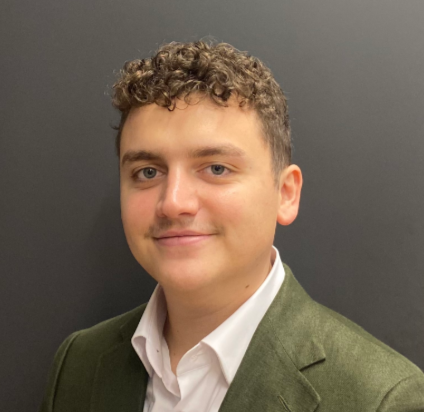
Meet Paolo-Luca ! He is a Broker at Liv-ex, he has specialist knowledge of the Asian fine wine market, and supports merchants across Asia Pacific…
What is the role of a Broker at Liv-ex?
At Liv-ex, the Broking team helps members to facilitate deals on the Exchange. It’s our job to understand our members interests and cellars inside out; we know what they’re looking to buy, what they’re willing to pay for those wines, what stock they are looking to sell, and again what price they’re willing sell at. We act as an extension of our members teams really. We’re an additional pair of eyes looking for relevant opportunities on the Exchange, an additional negotiator, it’s all about helping our members find opportunities and pushing them through as effectively as possible.
The Broking team supports members in a number of ways, we:
- Identify opportunities to trade based on the wines we know our members are interested in buying, or the wines we know they have to sell
- Advising on trading strategy, where a slight adjustment could help our members to maximise margin
- We act as a sounding board, helping two parties match a deal
- We also help them understand the market they operate in, the regional nuances, and opportunities based on the current market dynamics
What can you tell us about the Asian markets fine wine trading habits, and how has this changed in recent years?
The market in Asia has undergone a huge transformation. Traditionally, fine wine buying was driven by consumers seeking the right brands and labels at the lowest prices, with little attention paid to vintage quality. Today, there is a focus on wines that offer drinking appeal now, with buyers increasingly focused on finding the right vintage that delivers quality.
Every country in Asia has its own unique relationship with fine wine… Singapore is the central hub for all South East Asian trade; emerging markets in Thailand, Malaysia, Indonesia and Vietnam all operate through Singapore. In Singapore itself, younger collectors with ‘new money’ are open to new regions and styles. They’re still buying top end Burgundy and Rhone, but they’re also experimenting.
In Vietnam the younger drinkers are also experimenting. There’s strong demand for full-bodied, over-extracted ‘Parkerised’ wines. Yes, there’s the older demographic who buy more traditionally, but the young generations want to drink wines such as Pavie, Primitivo, Aussie Shiraz and the like.
Hong Kong has traditionally been a stock-holding hub, but it’s now a consumption-led market. Wines are often opened the night they’re bought, reflecting a recent shift in demand from long-term holding and towards immediate enjoyment. From speaking with members on the ground, it appears this resurgence in demand is being driven by local Hong Kong residents, and not by the Mainland Chinese who used to drive the local market.
Mainland Chinese buyers have been largely absent since early 2023, following a crackdown on cross-border trade and ‘personal consumption’ allowances by the Chinese authorities. And in Hong Kong, private clients are returning after years of overstocking. Much of that inventory has now been consumed, creating new opportunities to buy back vintage wines at prices not seen for a decade.
What challenges do Asian members encounter when trading fine wine, and how does the Broking team support them?
Asian members operate in one of the most competitive and fast-moving regions of the fine wine market. I’d say there are three main challenges that come with this, 1. price sensitivity, 2. condition and provenance, and 3. logistics complexity.
The market is incredible price-sensitive; private clients are not loyal, most buying happens online, and they are trying to find the cheapest deal, from the cheapest merchant. Often private collectors will buy from a new merchant just because they are offering the same wine at 10 HKD less. I spend time getting to know merchants, understanding what sells (and importantly what doesn’t), and ensuring I am offering sub-market deals to help merchants foster their client base whilst maximising their margin.
When it comes to condition and provenance, buyers need absolute assurance that the wine they receive is in good condition. There is a lot of scepticism in the market that if a label is damaged or even some packaging gets damaged in transit that it may not be authentic. Given its location, its distance, buyers in Asia can’t simply send a wine back, lead times can be long, and delays can really impact a merchants margins. If there’s any doubt about provenance or quality, trades can be delayed or even fall though.
On the Liv-ex Exchange members can see the condition a wine is in. Most wines are available in good condition, which has been verified by a Broker through pictures at the point a wine is listed for purchase on the Exchange. And then when the wine passes through a Liv-ex warehouse, high-risk cases are flagged and checked by our teams. Our teams are trained to look for anticounterfeiting measures such as microprint, holograms and QR codes. We work closely with producers and authentication experts to ensure we know what to look for, and that our measures and precautions are industry leading.
Cross-border trading can be a real challenge, from customs documentation to bonded warehouse transfers, fulfilment can slow down and really impact profitability. To simplify this, Liv-ex coordinates the entire logistics process, from moving the wine from seller to buyer, to verification and authentication, right through to customs documentation. We ship directly to Hong Kong on a weekly basis, so merchants in Asia receive their wines in a timely manner. Throughout this process merchants are only ever dealing with Liv-ex for invoicing, transport, shipment. We work with the member on the other side of the deal to take on the complexities of logistics.
Why is Lix-ex so beneficial for Asia’s fine wine merchants?
Liv-ex is a global network of buyers and sellers. When making a trade you could be buying from any one of 550 different merchants globally, all efficiently settled and made available by us. To give you an example, one of my clients from Asia has bought off 135 different merchants this year alone… Everywhere from UK, France and Italy, to Austria, Norway and Cyprus! And we’ve handled all the hassle of moving, condition checking, and getting the wine ready at a logistics hub of your choosing. Another one
Liv-ex enables members to understand the dynamics of the region they operate in, as well as the holistic fine wine market. They can access granular data and insights to understand the transactional pricing of a wine over the past 25 years, and they can streamline operations and logistics to trade more efficiently.
In Hong Kong and Singapore specifically, Liv-ex has launched local pricing benchmarks, allowing members to compare regional prices with global trends. That helps identify undervalued wines, spot early price movements and time deals more effectively.
Beyond the data and the Exchange, I meet merchants in person, speak with them regularly, and offer tailored insight into market dynamics. Being on the ground helps me to understand local pressures, and offer tailored support.
Before you go, what drew you to the world of fine wine, and Liv-ex?
I was first introduced to wine by my father when I was young. I used to help him serve wines at his dinner parties and helped him out in the cellar. We both grew our love for wines together and always want to show each other new and exciting regions, producers and styles. Since I moved professionally into fine wine, I have not looked back.
What drew me to Liv-ex was the opportunity to be at the centre of the market. Liv-ex isn’t just a trading platform, we work directly with our members, speaking to them, in some cases daily, and meeting them in person. We get to truly understand the holistic fine wine market, and then use this knowledge and insight to help our members. I get to see the real-time dynamics of the entire industry: merchants, châteaux, trade, and the opinions that shape it all. It’s a level of visibility and understanding that’s unmatched.
As a Broker, I can answer questions like “What’s happening in Asia right now?”, with confidence, because I have the data and insight to back it up. Whether it’s pricing trends, demand signals or market movement, I’m equipped to give honest, real-time insight that helps members make smarter trading decisions.