Author: Jake
Inside NAWR New York: What’s Changing in US Wine Retail
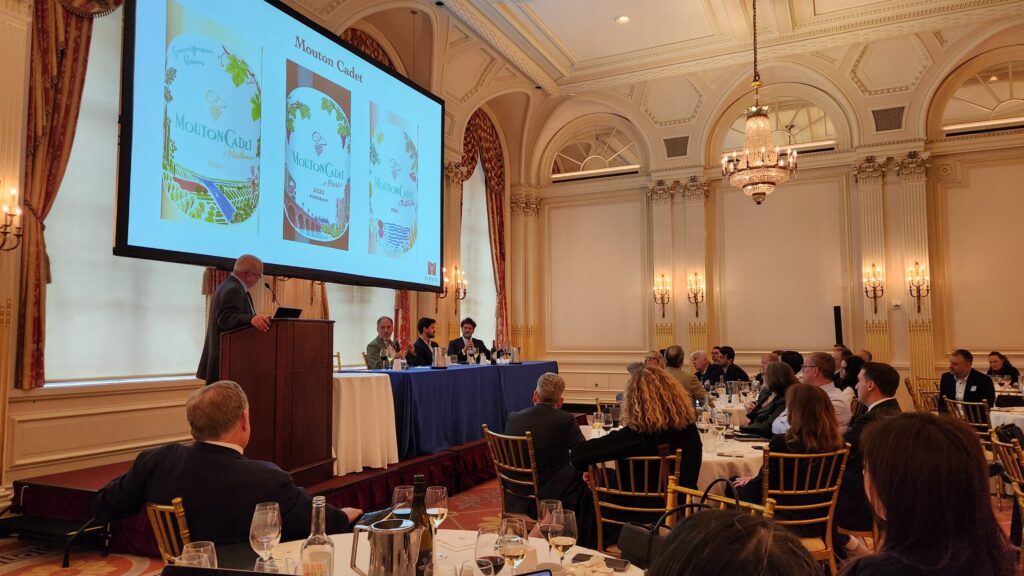
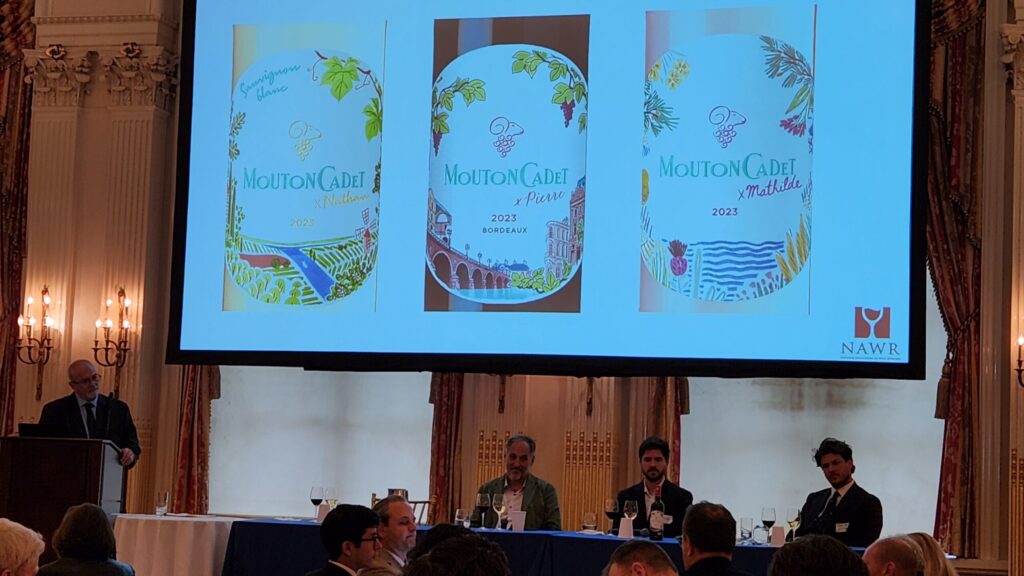
Robbie Stevens, Head of Broking at Liv-ex presented at NAWR (National Association of Wine Retailers) to discuss where Bordeaux is, and where it’s heading.
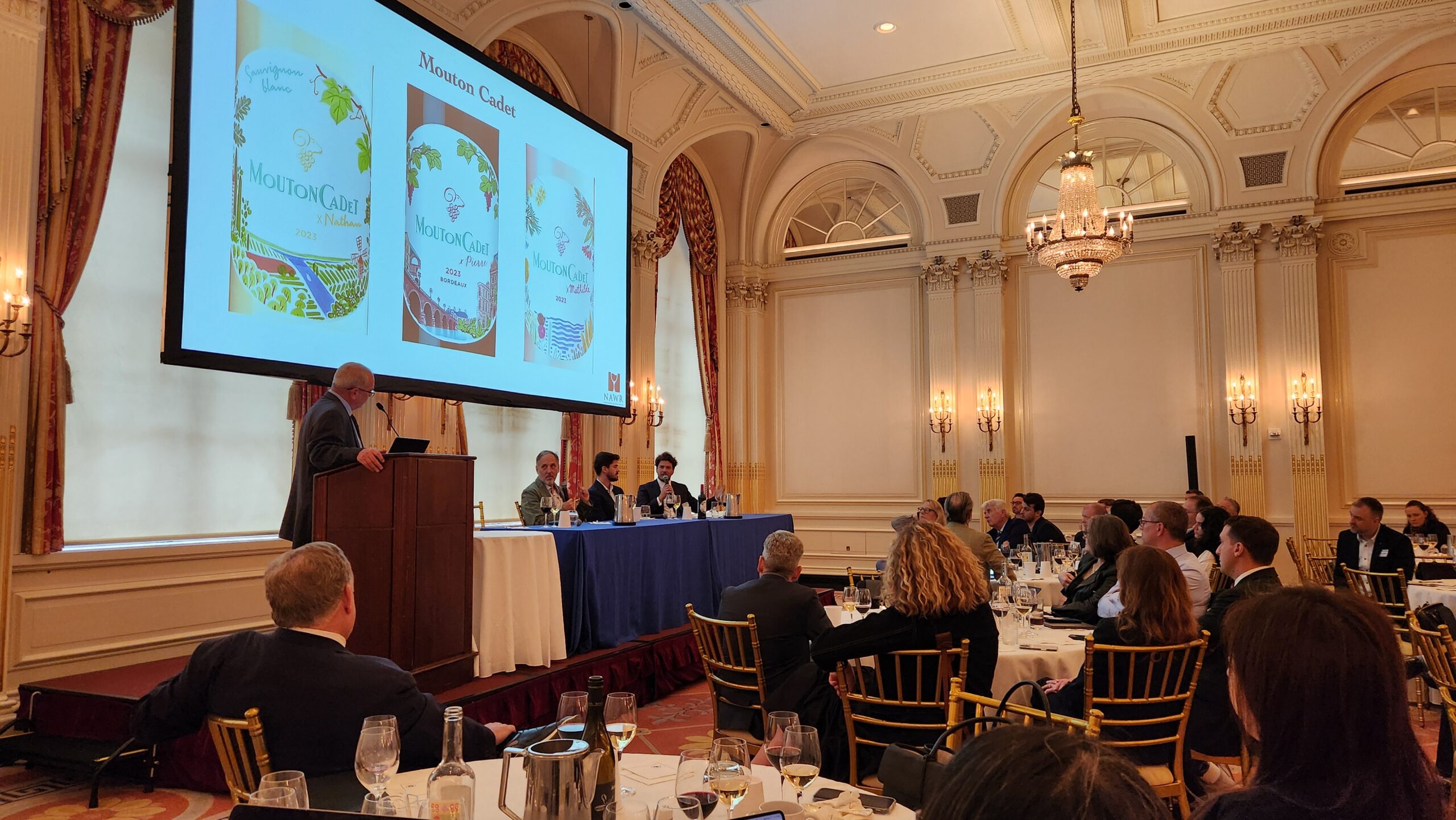
NAWR is the National Association of Wine Retailers, and they hold an Annual Summit in the US each year. I’ve now attended and been invited to speak at the last five NAWR summits, and this years event was certainly one of the most memorable – strong attendance, coupled with excellent content, and most importantly, fantastic engagement from the US wine trade. To download Robbie’s presentation slides, please fill out the form here.
Around 100 people were in the room, representing 50 to 60 businesses. As expected, retailers dominated, but there was a mix: logistics providers, lawyers, tech platforms, ERP systems, and press.
For Liv-ex, it was a valuable audience with a mix of members, service providers as well as plenty of new faces.
A recurring theme: the wine industry continues to struggle with data
One of the standout sessions came from Andrew Sussmann, CTO and co-founder of Preferabli. Andrew’s keynote was centred around AI and its adoption within the wine trade. One of his principal points will be familiar to most: the wine industry still struggles with data standardisation -particularly naming conventions.
What was interesting was where the conversation went next.
An audience member asked whether Andrew had heard of LWIN, and asked why the industry hasn’t coalesced around it in the same way publishing settled on ISBN. Sussmann’s response was ‘we love LWIN, it is by far the best standardisation out there and we encourage all our users to adopt it, but coverage remains a constraint.”
It’s always nice to hear other people championing Liv-ex, without the need to weight in.
Regulation, restriction, and the shifting US retail landscape
NAWR’s focus remains consistent: tackling the inefficiencies and barriers created by interstate shipping restrictions and the three-tier system – bureaucratic legislature dating back to the post-prohibiltion era.
If anything, the urgency is increasing.
Alongside structural constraints, US retailers are now dealing with a broader cultural and regulatory shift. The rise of anti-alcohol lobbying continues to gather momentum, with increasingly visible campaigns – particularly in cities like New York. At the same time, changing consumer behaviours, partly influenced by GLP-1 drugs, are seemingly having an impact on demand.
Several retailers reported softness in lower price points, while fine wine remains comparatively resilient.
There’s also growing competition from adjacent categories. CBD drinks, currently operating under a much looser regulatory framework, are expanding quickly, creating an uneven playing field. That said, many expect tighter regulation to follow.
The net effect is a market that is becoming increasingly complex to operate in, particularly for businesses reliant on volume-driven models.
A market adapting to tariffs, and looking to what’s next
The broader mood across the US trade felt cautiously stable.
Tariffs remain in place, but with a big question mark over them. Businesses have largely adapted. Compared to 2024, there’s a sense that operators are finding ways to manage the impact. There is some optimism following the Supreme Court ruling earlier this year declaring certain tariffs illegal, although uncertainty remains around enforcement and refunds. Many also fear that with the liberation day tariffs in question, other tariff triggers such as Digital Services Taxes might resurface; there is also the question of the unresolved Boeing/Airbus dispute.
From a supply perspective, there are early indications the auction market is beginning to recover, suggesting that previously imported European stock has largely worked its way through the system. If sustained, that should be a positive signal for import demand as a gap in the market begins to appear, and then grow.
Bordeaux: a timely conversation
I joined a panel alongside Jeff Zacharia and Pierre Ogden de Rothschild to discuss where Bordeaux is, and where it’s heading.
As we were in the midst of a Bordeaux En Primeur campaign, it was a timely discussion.
For many in the room, this was an opportunity to engage more directly with market data and pricing dynamics. The level of audience participation suggested strong interest – not just in Bordeaux as a category, but in how it’s evolving within a broader global market context.
Encouragingly, the conversation didn’t stop when the panel ended. Over the following 24 hours, there were multiple follow-ups on the topic itself, and on how tools like Liv-ex can help inform decision-making.
To download Robbie’s presentation slides, please fill out the form here.
Lasting Takeaways
What NAWR reinforced is that US wine retail is becoming more nuanced:
- Regulation remains a defining constraint
- Consumer behaviour is shifting at the lower end
- Competition is broadening beyond traditional wine
- Data, and the ability to use it effectively, is increasingly critical
For businesses navigating this, access to accurate pricing, liquidity, and global supply is no longer a nice-to-have – it’s fundamental.
The US remains one of the most dynamic, and complex, wine markets globally. Events like this are a useful reminder that while the challenges are evolving, so too is the industry’s willingness to adapt.
Author: Jake
TheDrinksBusiness Conference 2025 – The Digital Transformation of the Fine Wine Trade
James Miles, Liv-ex CEO, talks us through his insights and learnings from sitting on the Multi-Channel panel at this years Drinks Business Conference.

James shared a few key takeaways below.
How technology is breaking down silos and creating a networked wine ecosystem
For decades, fine wine merchants have grappled with a fundamental operational challenge: how to manage inventory across multiple sales channels without sacrificing efficiency or customer service. The complexity of coordinating stock between sales teams, e-commerce platforms, and trading exchanges (like Liv-ex) while serving diverse customer segments—from private collectors to the on-trade—has forced many businesses to choose between growth and operational simplicity.
This trade-off is now becoming obsolete.
The Multi-Channel Challenge
Historically, managing a multi-channel distribution strategy in fine wine presented significant barriers, particularly for small and medium-sized enterprises. Merchants needed to maintain accurate stock positions across physical locations, online storefronts, and trading platforms like Liv-ex, all while serving customers with different requirements and price expectations.
The technical infrastructure required was both expensive and complex to build. Many businesses defaulted to low-tech solutions: basic ERP systems or shared spreadsheets. While pragmatic, these approaches carried substantial opportunity costs. Stock allocated to one channel couldn’t be sold through another, resulting in missed sales opportunities. Communication breakdowns led to double-selling— an expensive and damaging error in a market built on trust and relationships.
The Technology Shift
Three converging developments have fundamentally changed this landscape:
Cloud-based ERPs – like Wine Owners – have made sophisticated inventory management accessible and affordable, eliminating the need for expensive on-premise infrastructure.
Standardization through LWIN has created a common language for the trade. The Liv-ex Wine Identification Number enables seamless communication between different systems, eliminating the ambiguity that has plagued wine data for generations.
Integrated solutions such as Actenzo now provide affordable connectors between platforms, enabling real-time synchronization across channels without custom development costs.
Implemented intelligently, multi-channel selling becomes remarkably powerful. Merchants can now market their inventory across all channels simultaneously, 24/7, with minimal risk or administrative friction.
The results speak for themselves. Customers who have integrated their stock lists with Liv-ex, as an example, haven’t seen modest improvements—they’ve experienced exponential growth. Sales increases of 2-3x are not uncommon, achieved without additional overhead or marketing investment. The inventory works harder, captured demand increases, and operational efficiency improves dramatically.
Beyond Multi-Channel: A Paradigm Shift
Yet multi-channel selling is merely one application of a much broader digital transformation. The same technologies enabling integrated sales are revolutionizing sourcing, logistics, and data management across the entire value chain.
For centuries, the wine trade has operated as a collection of independent silos. Interactions between stakeholders—suppliers, customers, logistics partners—have been expensive, slow, and friction-laden. Manual processes, re-keying data, and administrative overhead have been accepted as unavoidable costs of doing business.
This is changing. The combination of common standards like LWIN, APIs, cloud computing, and an expanding ecosystem of specialized software tools is dismantling these silos. The trade is evolving into a networked ecosystem of connected partners, each focusing on their areas of specialization and competitive advantage while sharing resources when mutually beneficial.
Liv-ex as Infrastructure
Liv-ex has positioned itself at the centre of this transformation—not as a retailer or wholesaler, but as essential infrastructure for the trade.
Our approach is deliberate. We create and maintain standards like LWIN and the Standard-In-Bond (SIB) contract. We provide real-time pricing and availability data. Crucially, we make all our services available via API, enabling seamless integration with our customers’ systems.
Our B2B focus is foundational to our role. We don’t compete for end customers—whether collectors or the on-trade. We don’t take stock positions or chase producer allocations. This positions us as a trusted partner to merchants rather than a competitor, free from the conflicts that would arise from pursuing allocations or optimising profits from our own inventory.
Merchants use Liv-ex not only as a selling channel but increasingly as a sourcing tool. Because pricing and availability updates in real-time, customers can integrate our API with their e-commerce platforms and stock systems, treating Liv-ex inventory as an extension of their own.
This dramatically expands their offering—from perhaps 1,000 wines to more than 25,000—without any working capital investment or administrative burden. Logistics, payments, and provenance verification are all managed by Liv-ex, with the exchange underwriting transactions and managing risk. Equally a plethora of marketplaces have emerged, often scaled on Liv-ex services, that allow wine merchants to provide transparency and liquidity to their customers.
Beyond trading, customers leverage Liv-ex APIs to enhance their operations: pulling pricing data for valuations, accessing critic scores and drink-by windows to inform sales strategy, or retrieving ABVs and commodity codes to streamline logistics and compliance. The fine wine world’s data is no longer locked away in a cupboard it is available to whomever you choose and in real-time.
The Competitive Landscape Ahead
This new world of transparency and automation presents both tremendous opportunities and significant challenges, particularly for legacy businesses comfortable with opacity and manual processes.
As in financial markets, wine merchants must make strategic choices about how they will compete. Will they create liquidity by deploying capital in stockholding? Will they differentiate through superior service and execution? Will they specialize in particular regions, styles, or customer segments?
The market is already signalling its preferences. In a recent Liv-ex survey of 235 collectors across more than 30 countries—with average cellar values of £300,000—the priorities were unambiguous:
Transparency: Collectors want impartial data and insights to inform their decisions.
Liquidity: They want to buy and sell confidently and quickly at the right price.
Control: They want agency over pricing and timing, preferably through online and mobile platforms.
Crucially 75% of respondents do all of their selling through one channel, making satisfying these needs particularly sticky and valuable. They also align perfectly with the capabilities that digital infrastructure enables. Merchants who embrace this transformation can meet these needs efficiently and profitably. Those who resist risk being left behind.
Conclusion
The fine wine trade stands at an inflection point. The technology to operate as a connected, efficient ecosystem now exists and is increasingly affordable. Standards are established. Tools are available. The market—both trade and collector—is ready.
The question is no longer whether this transformation will occur, but rather how quickly individual businesses will adapt to capitalize on the opportunities it presents. The paradigm is shifting from isolated silos to an integrated network. Those who recognize and act on this shift will define the next era of the fine wine trade.
Author: Jake
James Miles – Vine To Mind 2025 Symposium Takeaways
James Miles, Liv-ex CEO, talks to us through his insights and learnings from the Vine to Mind Symposium.

Exploring the Intersection of Wine, Data Science & AI
James Miles (Ceo of Liv-ex) recently attended the 2025 Vine to Mind Symposium in Lausanne — a one-of-a-kind event that explored how wine, data science, and AI are starting to blend in surprising ways. Held at the École hôtelière de Lausanne, the symposium brought together wine experts, researchers, and tech folks to dive into everything from AI-driven tasting tools to smarter vineyard management.
James shared a few key takeaways — here they are:
How was the 2024 Bordeaux En Primeur Campaign?
It was exceptionally challenging. Yields were substantially down from normal levels. In this fixed-cost business, halved yields mean halved income and doubled costs per bottle. Véronique Sanders of Haut-Bailly reported costs up four times per bottle compared to 2023. While many châteaux made good wines, prices needed to be substantially lower given the vintage profile. For most, 2024 was breakeven at best, but with China and the US out of the market, sales were soft. It’s the first vintage where every wine remained available at campaign’s end. UK En Primeur sales were 60% lower than last year and 80% lower than 2019.

What can we learn from recent campaigns?
En Primeur sales peaked in 2009 and have declined since. Véronique Sanders argued that Bordeaux represents great value—of the top 100 most expensive wines globally, only two (Petrus and Le Pin) come from Bordeaux. While valid, price remains central to En Primeur’s brand promise. Unlike most wines on the top 100 list, Bordeaux is made in large quantities. The argument for buying En Primeur has always been timing, but data shows collectors often benefit more from buying when wines become physical or ready to drink. The uncomfortable truth: price matters to customers, and the market has never been more transparent.
Why has En Primeur been so badly priced in recent years?
Historically, new vintages cost a third to half the price of 10-year-old vintages, compensating buyers for carrying costs until ready to drink. When accounting for opportunity cost, storage, and risk, this could easily be 10% annually. However, many 2022 Bordeaux wines were released at premiums to most available vintages, including some 2000s. This was unsustainable and largely explains the demand collapse.
How were the châteaux able to get away with this for so long?
Extremely loose fiscal and monetary policy after 2008 kept money supply high and interest rates near zero for over a decade. Rising demand and prices convinced many châteaux they owned luxury brands, not vineyards. They invested heavily in commercial capabilities, machinery, and new wineries, often with borrowed money. Simultaneously, they reduced Grand Vin production, promoted second and third wines, and cut yields to boost quality. Crucially, they reduced en primeur sales from 90% fifteen years ago to 30-50% (zero for Château Latour), creating false scarcity. This sparked an arms race among négociants using low rates to increase allocations through debt to protect revenue in a shrinking market.
Can the system survive the current crisis?
Yes, but it will be painful. Stock build-up across the supply chain is particularly acute in Bordeaux. Many négociants hold over two years’ sales in stock with debt-to-equity ratios exceeding 100%, amid rising interest rates and costs and falling prices. Many châteaux are learning firsthand about the risks and costs of holding stock. With no one in the chain (from chateaux to collector) making money, change is inevitable. Châteaux may sell excess capacity by declassifying their Grand Vins as generic Bordeaux, but mostly adjustment will come through lower prices, particularly for young wines where oversupply is worst. Liv-ex already shows newly released vintages falling 20-30%. Châteaux must abandon their luxury brand illusion and return to Bordeaux’s strength: high-quality wines in large volume at great prices. They need to reconnect with customers and match expectations on pricing — which will be much lower than recent investments allow – and leave enough margin for their distributors around the world to make selling Bordeaux worthwhile. It is going to be an uncomfortable time, but for lovers of claret everywhere – it is a buyers market.
Author: Jake
25 Years of Fine Wine – How Buying and Selling Has Matured with Time
Justin Gibbs, Exchange Director at Liv-ex talks to us about the fine wine landscape pre Liv-ex.


What did fine wine trading look like before Liv-ex ?
Pre 2000, before Liv-ex, there was little in the way of technology – something we now all take for granted, and perhaps feel has been with us forever. Mobile phones did not become mainstream until the middle of the 1990s, emails in the late 1990s and websites only at the turn of the Millenium. When Liv-ex launched in 2000 most merchants were still on dial-up modems which meant even the most efficiently coded sites, ran painfully slowly. So many merchants were still operating as they had done in the 1980s and 1990s with hard copy catalogues being sent by post and offers being shared via fax. Pen and ink were mainstays.
The market was therefore very opaque, dominated by a handful of large merchants in each country who saw most of the offers, and subsequently were best positioned to price wine. There were fewer merchants overall and gross margins were higher. Collectors were totally reliant on their merchants for information.
En Primeur campaigns were launched only after the majority of the wines had been released and catalogues printed and posted.
In short, it was an analogue world that operated at a leisurely pace, with price information scarce and far from comprehensive.
What was your vision for the fine wine trade when you started Liv-ex?
We have the same vision today as we had in 2000 – to make the market more transparent, efficient and safe. By doing this we felt we could help grow the market for the benefit of all – growers, merchants and collectors alike. We still believe that today.
Did you run into any hurdles along the way?
Plenty. But to name just three………..
First, the idea of transparency was anathema to the trade. It meant margins would come under pressure, which to a degree they did. But transparency was on its way, thanks to the internet, and they needed to adapt. It took many meetings with prospective members to explain what James and I had learnt in financial markets – that transparency brings greater trust in a market and greater trust leads to greater confidence, broadening participation and thus growing the market. Smaller margins perhaps, but a far bigger market for all.
Second, unknown to us, we were not the only wine exchange that was being built. We launched for trade in July 2000 and found that almost a dozen others had already launched or were in the process of doing so. Despite the fundamental difference between us and them – all of their models set out to disintermediate the trade, by connecting growers and collectors directly, while ours has always been built around the trade itself – their presence muddied the waters greatly and meant it took longer for the trade to understand and trust us.
Third, technology. We needed to adopt the latest technology, but we could not get too far ahead of our members who were moving at a more glacial pace. This meant great leaps forward were nigh impossible and tech iterations more regular and costly.
What were the quantum leaps/ game changers, in Liv-ex’s evolution that vastly improved trading ability?
Without doubt the first and most important was the SIB contract. Until then, every deal between traders was subject to availability, condition etc, etc…..ie deals could be cancelled, nothing was firm. With the introduction of the SIB contract, not only did we set minimum standards of condition, but also the number of weeks till available. And all bids and offers on Liv-ex were firm – a commitment by both parties to the transaction. This meant no need for back and forth over the phone and email with questions, saving a lot of time and effort.
The second was introducing anonymity to the contract. Initially members settled with each other at the end of the day. By introducing anonymity, and taking control of the settlement process, many more merchants joined, pleased to be able to buy and sell wine without having to explain themselves to others.
Since those early days of working with our members to create the standards around trade and settlement, we have continued to invest in technology and data, helping our members to expand their services to their clients whether it be through broadening the wines they can offer, or providing them with independent, real time valuations, and on the back of these, independent insights.
How has your role grown/ evolved over the past 25 years?
We continue to work closely with our members to improve and personalize the tech we offer them, to aggregate, clean and deliver to them comprehensive and independent data, to broaden and deepen the pool of liquidity available to them and their clients and to keep in sharp focus the most challenging area of all – the efficient settlement of transactions between 600 counterparties in 47 countries. And to do it quietly in the background while they get on and develop their client bases and the services they offer them.
How has data and technology impacted/ improved the ability to buy and sell fine wine?
Hugely. 600 counterparties can now trade through one centralised, independent, transparent, rules based platform, saving members an enormous amount of time both pre and post trade. This allows them to concentrate on their growers and their private customers, who are the ultimate winners here and have never been better served.
Author: Jake
25 Years of Liv-ex: Building A Global Fine Wine Exchange
An interview with our CEO, James Miles, to mark 25 years of Liv-ex.

Liv-ex, where did it all begin?
Twenty-five years ago, my friend Justin Gibbs and I left well-paid careers in the City to start something completely different: an exchange for fine wine. Liv-ex was born above a barber shop and pizza joint on Lavender Hill in Battersea (a London suburb). Our first office was freezing in winter, stifling in summer, and so noisy that early customers thought we were working in the street.
What were you trying to achieve by starting Liv-ex?
Our idea was simple, if ambitious… To create a stock market for wine merchants. We called it the London International Vintners Exchange—shortened to Liv-ex—a name that captured exactly what we were trying to build.
Back then, wine trading felt stuck in the past. Deals were made over the phone or by fax. Prices were opaque. Processes were slow, inefficient and risky. But to us, it looked a lot like the equities market—fragmented by both products and players, with similar issues around trading, settlement and price discovery. In equities, those problems had largely been solved by electronic exchanges. We believed something similar could be done for wine. Our vision was to make the wine market more transparent, efficient, and safe and, in so doing, increase activity and the size of the market for everyone’s benefit.

What did Liv-ex look like 25 years ago?
Our first platform was painfully slow, running on dial-up internet. Justin and I quickly realised that if this was going to work, we’d need to build liquidity ourselves—calling customers, collecting stock lists in Excel, and inputting orders manually. We also began building a basic database to help us understand how the market was shaped and priced.
In July 2000, we launched Liv-ex with just 12 London-based members, all of whom agreed to work with us for free! It was the middle of the dot-com crash. Capital was scarce, but we raised a seed round from friends and family in December that year, started charging in January 2001, and began slowly growing our customer base across the UK, then into Bordeaux, Europe, Asia, and the US.
How has Liv-ex evolved over the years?
One of our earliest—and most transformative—innovations was the introduction of the Standard In Bond (SIB) contract. We needed a consistent, trusted framework to help members trade confidently. The SIB contract defined that any wine traded on Liv-ex had to be in bond, in its original packaging, in good condition, and settled within 14 days. Importantly, any bid or offer on the platform had to be a firm commitment—not subject to availability or confirmation.
This changed everything. It eliminated uncertainty, introduced real-time pricing, and created liquidity. Unlike auctions, where every lot is unique, the SIB contract made fine wine trading fungible. An SIB case of Lafite 2000 is interchangeable with another SIB case of Lafite 2000—standardised, comparable, and easy to price accurately.
By 2002, we had developed the ability to act as a central counterparty, anonymising trades and taking care of settlement. That meant buyers and sellers no longer had to interact directly—we handled the risk, the paperwork, and the logistics.
The arrival of broadband, followed by China’s emergence as a major market, gave the business a real boost. From there, we introduced tools and innovations that have since become industry standards like Liv-ex indices, market intelligence, LWIN (our unique wine identifier), and our suite of APIs.
And where is Liv-ex now?
Now, 25 years on, Liv-ex is home to the world’s largest business-to-business network of fine wine buyers and sellers. Justin and I have been fortunate to work with an incredible team, and to serve a global community of members who have trusted us along the way.
We’ve loved every moment of the journey so far—and we’re more excited than ever about the opportunity that lies ahead.